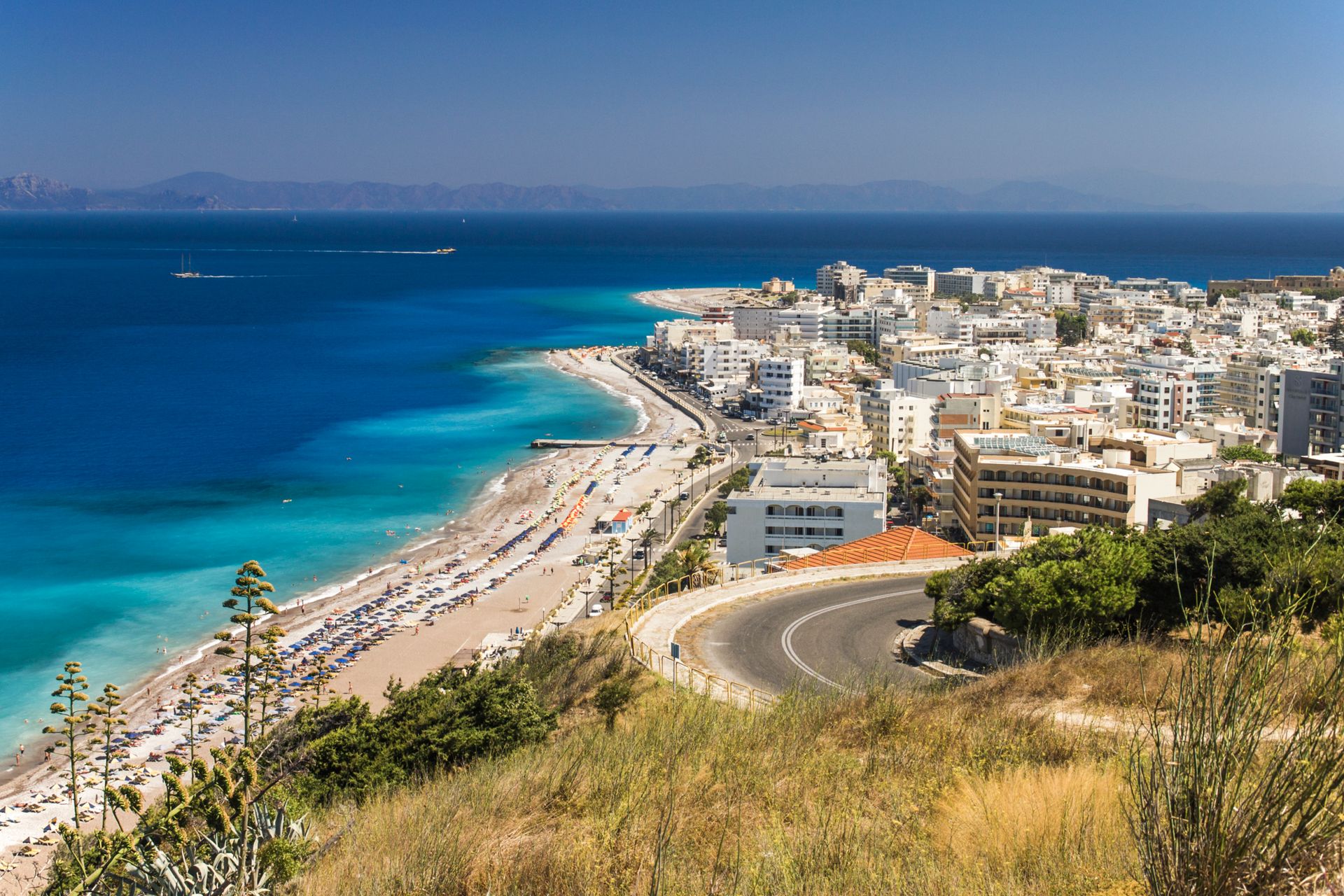
Rhodes is two islands in one: a walled medieval city that happens to sit on the Aegean, and a coastline of bays and hill villages behind it. Three days is enough for both, if you order them properly.
Most three-day plans for Rhodes fail in the same way. They treat the island as a beach holiday with some sightseeing bolted on, and they schedule the sightseeing for the middle of the day — which, on a Greek island, is when nobody should be walking uphill on stone.
The route below is built around that constraint. Old Town and Lindos in the morning and evening; water and shade in between.
Before you go: four decisions
These matter more than the route
Stay in or near the Old Town
Rhodes has large resort strips to the north and south, and staying in one of them turns every trip into a transfer. The Old Town is the reason people come; being able to walk out into it at nine in the evening, after the day visitors have gone, is worth more than a swim-up bar.
Decide whether you need a car
For this exact three-day route, you don't strictly need one. Buses run to Lindos regularly and taxis cover the rest. But a car turns the island's quieter beaches from a logistical exercise into a decision you make at breakfast — and hire costs on Rhodes are moderate.
Go in the shoulder months if you can
May, June, September and early October are the island at its best: warm sea, manageable heat, and Lindos without the peak-summer crush. July and August are hot enough that the middle of the day is genuinely unusable for anything on foot.
Book Lindos dinner in advance
The good restaurants in Lindos village are small and have terraces with a limited number of tables facing the right way. In season, the ones worth eating at are booked days ahead. This is the single easiest thing to get right and the most common thing people skip.
Day 1 — Rhodes Old Town
Arrival day
The airport is about twenty minutes from Rhodes Town by taxi. Drop your bags, then walk into the Old Town.
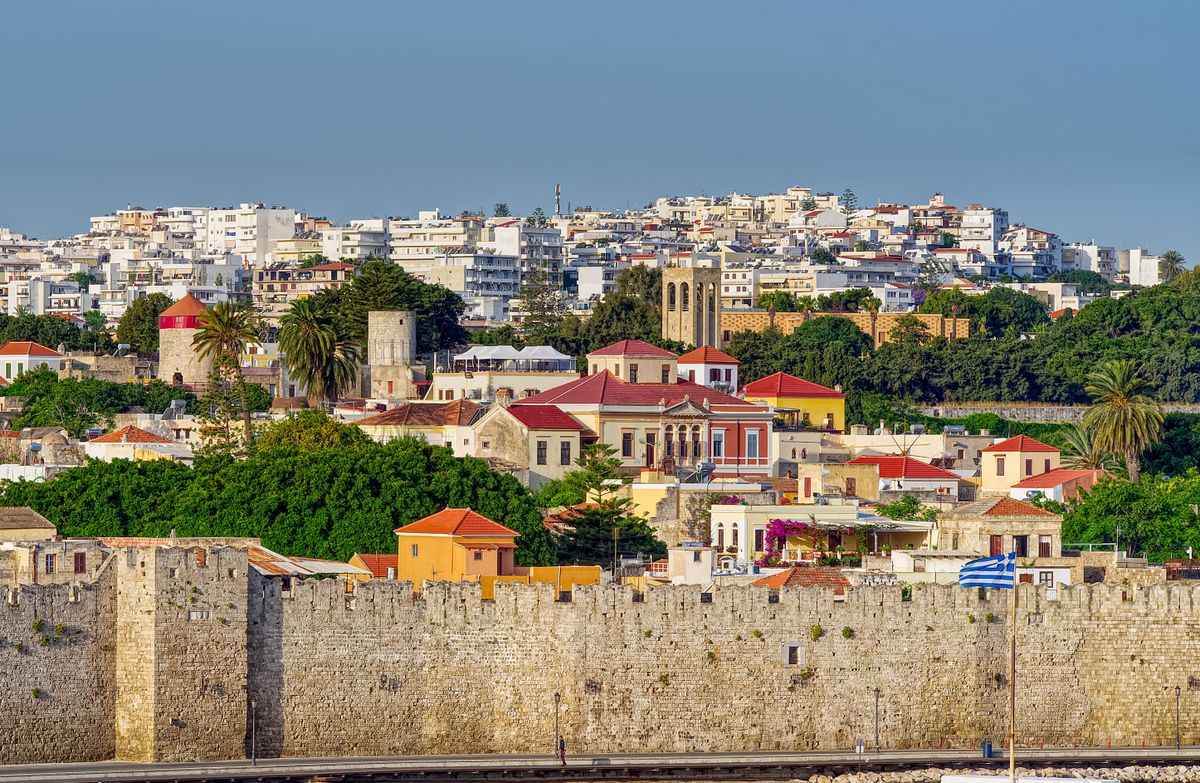
What's unusual about it is that it's inhabited. This is one of the largest continuously lived-in medieval towns in Europe — behind the walls there are houses, schools, cats, laundry, and people going about their afternoon. It is not a reconstruction.
Two things are worth planning around:
The Street of the Knights runs uphill from the harbour side and is the most complete medieval street on the island. It's at its best early in the morning or in the last hour of light — in the middle of the day it's full and the stone reflects heat.
The Palace of the Grand Master sits at the top of it. Worth the entry, and worth an hour rather than three.
Beyond those, the honest advice is to stop navigating. The Old Town is small enough that you cannot get properly lost and interesting enough that wandering beats a list.
Evening
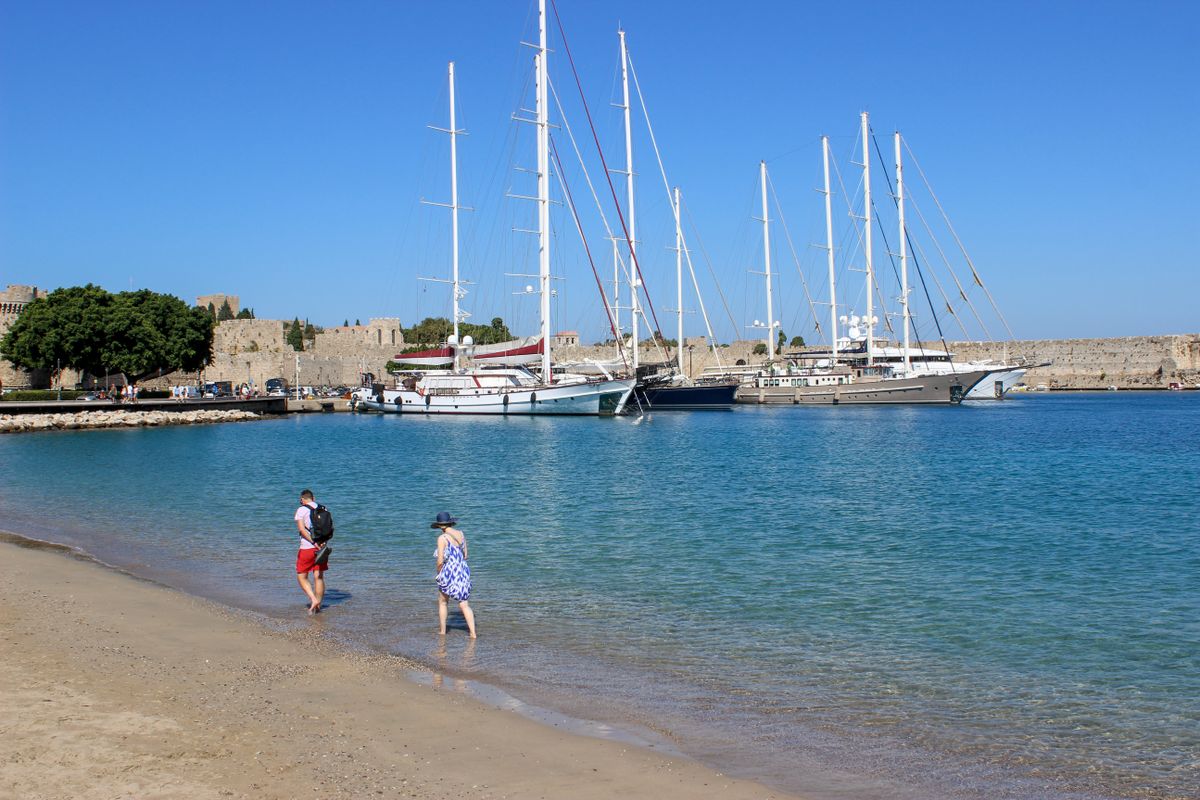
Walk out to Mandraki Harbour before sunset. The two bronze deer on columns mark the entrance where the Colossus is traditionally said to have stood — the story is almost certainly wrong, and it's still the best light of the day for photographs.
Then dinner inside the walls.
Day 2 — Lindos and Anthony Quinn Bay
The big day
Lindos is about an hour south of Rhodes Town. It is the thing people picture when they picture the island: a white village stacked below a rock, with an ancient acropolis on top of it and a bay below.
Go early. This is the whole trick to Lindos. The climb to the acropolis is exposed, the village lanes are narrow and get crowded by mid-morning, and the coaches arrive on a schedule. Being there by nine changes the experience entirely.
The acropolis itself is a layered site — a Doric temple, a Byzantine chapel, and a medieval castle built on top of each other by three different sets of occupiers. The view from the top, down onto St Paul's Bay, is the one that ends up on the fridge.
You will be offered a donkey ride up to the acropolis. Animal welfare organisations have raised persistent concerns about the conditions these animals work in, particularly in high summer heat.
The walk takes fifteen to twenty minutes. Go early, take water, and walk.
Lunch in Lindos
Afternoon — Anthony Quinn Bay
On the way back north, stop at Anthony Quinn Bay, a small rocky cove named after the actor, who bought land here while filming on the island in the 1960s.
It is not a sand beach. It's rock and pebble with exceptionally clear water, which makes it one of the better places on Rhodes to snorkel. Bring water shoes if you have them — the entry is stony.
It is also small, which means it fills. Late afternoon, once the day groups have moved on, is the best window.
Planning this for real dates?
This is a good general three days. Yours has specific dates, a budget, and people with specific tolerances for heat, walking and early starts — all of which change what should be in it. That's the part we do.
See how it worksDay 3 — Butterfly Valley, or the sea
Departure day
Two honest options here, depending on what kind of trip you've had.
Option A: Butterfly Valley (Petaloudes)
A shaded river valley inland, with wooden bridges and walkways running up through the trees. In summer it fills with Jersey tiger moths, which settle on the tree trunks in enormous numbers.
Two things to know. First, the moths are only there in the warmer months — roughly June to September. Outside that window, it's a pleasant shaded walk and not much more. Second, the moths are dormant during the day and startling them makes them fly, which costs them energy they can't easily replace. Clapping to make them move is genuinely harmful, and signs ask you not to. Walk quietly.
Option B: A last swim
If you've spent two days on stone and stairs, the better answer may be a beach and nothing else. Tsambika, on the east coast, is the most reliable sand beach within easy reach of Rhodes Town. Kallithea, closer in, has restored 1930s spa architecture around the coves, which makes it more interesting than a strip of sand.
Where to stay
Two approaches that both work
The trade-off is simple. Inside the walls you get atmosphere, walkability and evenings in the Old Town — but no pool, and dragging a suitcase over cobbles. On the coast you get space and swimming, and a taxi every time you want dinner in town.
For three days, we'd stay in the Old Town. For a week, we'd split — two nights inside the walls, the rest on the coast.
Getting around
- Airport to Rhodes Town — about twenty minutes by taxi, metered.
- Buses — KTEL runs from the main station in Rhodes Town to Lindos and most coastal villages, every one to two hours. Cheap and reliable, but they set your schedule rather than the other way round.
- Car hire — the flexible option, and worth it if you want the quieter beaches. Book ahead in high season.
- Plugs — Type C/F, 230V. The same as most of continental Europe; no adapter needed if you're travelling from the EU.
Doing the Old Town and Lindos on the same day. Both are uphill, both are stone, and both are best early — you cannot be early twice.
Split them across two days and give each one a morning. The trip is completely different.
What it costs
Indicative, per person
Rhodes spans a wide range — you can eat at a taverna for very little or at a terrace restaurant in Lindos for considerably more, and accommodation swings hard between shoulder season and August.
Dinner at the restaurants above sits in the range of roughly €20–35 per person. Buses to Lindos are a few euros each way; a taxi from the airport into town is around €20–25. Car hire is typically €35–60 a day depending on season and how far ahead you book.
Treat all of these as a starting point rather than a quote, and check current prices before you commit to anything.
Want this built around your trip?
Your dates, your budget, your pace — and the version that accounts for whether you're travelling with a four-year-old, a heat-averse partner, or nobody at all.
Get your planFull itineraries from €15 · Delivered in 48 hours · No affiliate links, ever