This is the full route. No email required, no download, no catch — just the three days we would book ourselves, in the order that makes them work.
Most three-day Tuscany itineraries make the same mistake: they base you in Florence and then send you back out again every morning. You spend two of your three days in traffic, and you see the region through a windscreen.
Tuscany is small. From the middle of Chianti, almost everything worth reaching is within forty minutes. Base yourself there instead and the whole trip changes shape — shorter drives, better food, and mornings that start with a view instead of a hotel corridor.
Here's how we structure it.
Before you go: three decisions
The part that matters more than the route
Fly into Pisa, not Florence
Pisa airport is smaller, easier, and usually cheaper — and it is roughly the same driving distance to Chianti. Florence airport looks closer on a map, but you pay for that proximity in both airfare and the time it takes to get out of the city.
Pick up the car at the airport. Tuscany without a car is possible but limiting; the parts of it people fall in love with are between the towns, not in them.
Book restaurants before you book anything else
This sounds excessive. It isn't. The good places in Chianti have somewhere between eight and twenty tables, they're run by families, and in autumn they fill weeks ahead. The difference between a memorable dinner and a mediocre one here is almost entirely a matter of whether you called in advance.
Choose autumn if you can
September and October are the best months in Tuscany and it isn't close. Harvest is happening, the heat has broken, the crowds have thinned, and the light in the late afternoon is the thing photographers come for. July is hotter, busier, and — counterintuitively — worse for food, because a wine region in high summer is a wine region waiting.
Day 1 — Siena
Arrival day
Land, collect the car, drive to Siena. It's about an hour and a half from Pisa, and it's the right first stop because Siena does something no other Tuscan town does: it makes the scale of the place obvious immediately.
Park outside the walls. This is not a suggestion. Siena's centre is a restricted traffic zone, camera-enforced, and the fine will find you at your home address several months later. There are large car parks just outside the gates — use one and walk in. It takes ten minutes.
Head straight for the Piazza del Campo. It's a shell-shaped square that slopes downward, which sounds like a small detail and turns out not to be — people sit on the paving as if it were a beach, and the whole square functions as the town's living room. Go in the late afternoon, when the light hits the Torre del Mangia and the stone turns the colour the city is named after.
The cathedral is worth the entry fee. The striped marble interior is genuinely unlike anything else in Italy, and the floor — usually partly uncovered — is a series of inlaid marble panels that took two centuries to complete.
Then stop. One town, properly, on your arrival day. Resist the urge to add San Gimignano because it's "on the way." It isn't, and you'll be tired.
Drive to your Chianti base after dinner — it's around forty minutes from Siena and the roads are quiet in the evening. You'll wake up in the countryside rather than a city, which is the entire point of doing it this way.
Day 2 — The Chianti road
The best day
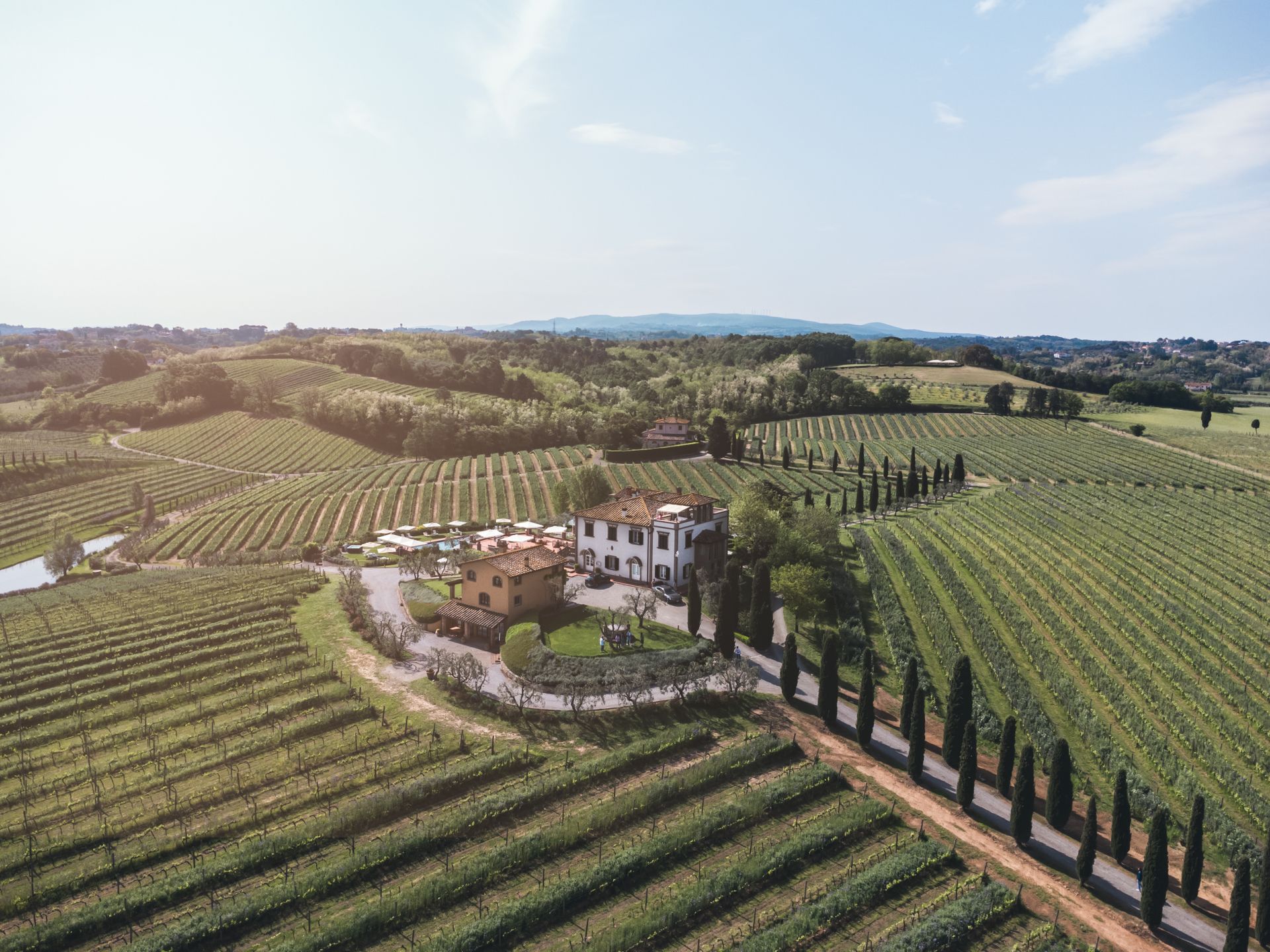
This is the day people remember. The stretch of road between Castellina in Chianti and Greve in Chianti is the drive that appears in everyone's mental image of Tuscany: cypress avenues, vineyards in rows down the hillsides, stone farmhouses that have been there for four hundred years.
Don't rush it. The distance is short — under thirty kilometres — but the point is stopping. Pull over when something looks good. There is no schedule that improves this day.
Visit one wine estate, not three
Three tastings in a day is a wine tour. One tasting, done slowly, is a memory. Book ahead — walk-ins used to work in Chianti and increasingly don't, particularly at the estates worth visiting.
Lunch on the road
Greve in Chianti has a triangular arcaded main square and is the natural place to stop mid-route. It's touristed but not unpleasantly so, and it's a working town rather than a museum piece.
The best meal of your trip will be twenty minutes outside the centre of somewhere. It almost always is.
Planning this for real dates?
This route works for a general three days. Yours has specific dates, a specific budget, and people with specific tolerances for driving and walking — which changes what should be in it. That's the part we do.
See how it worksDinner
These are the three we send people to most often. All three need booking — the first two especially.
Day 3 — San Gimignano
Departure day
Fourteen medieval towers on a hill, visible from a long way off. In the twelfth century there were more than seventy — every wealthy family built one, and building taller than your neighbour was the entire point.
Timing is everything here. Between roughly 11am and 4pm, San Gimignano belongs to coach tours and the main street becomes a slow-moving queue. Arrive before ten or after four and it's a different town — quiet lanes, open views, and the towers doing what towers do.
It doesn't need long. Two hours of walking covers it properly, which makes it a good final stop before driving back toward Pisa.
Italian historic centres are surrounded by zone a traffico limitato: restricted zones enforced by automatic cameras. There is no barrier and often no obvious sign until you're already past it.
Drive into one without a permit and the fine is automatic. It reaches your home address anywhere from two to eight months later, usually with the rental company's administration fee attached.
Park outside the walls. Every town, every time. This single habit prevents the most common and most expensive mistake visitors make in Tuscany.
Where to stay
Base yourself in the countryside
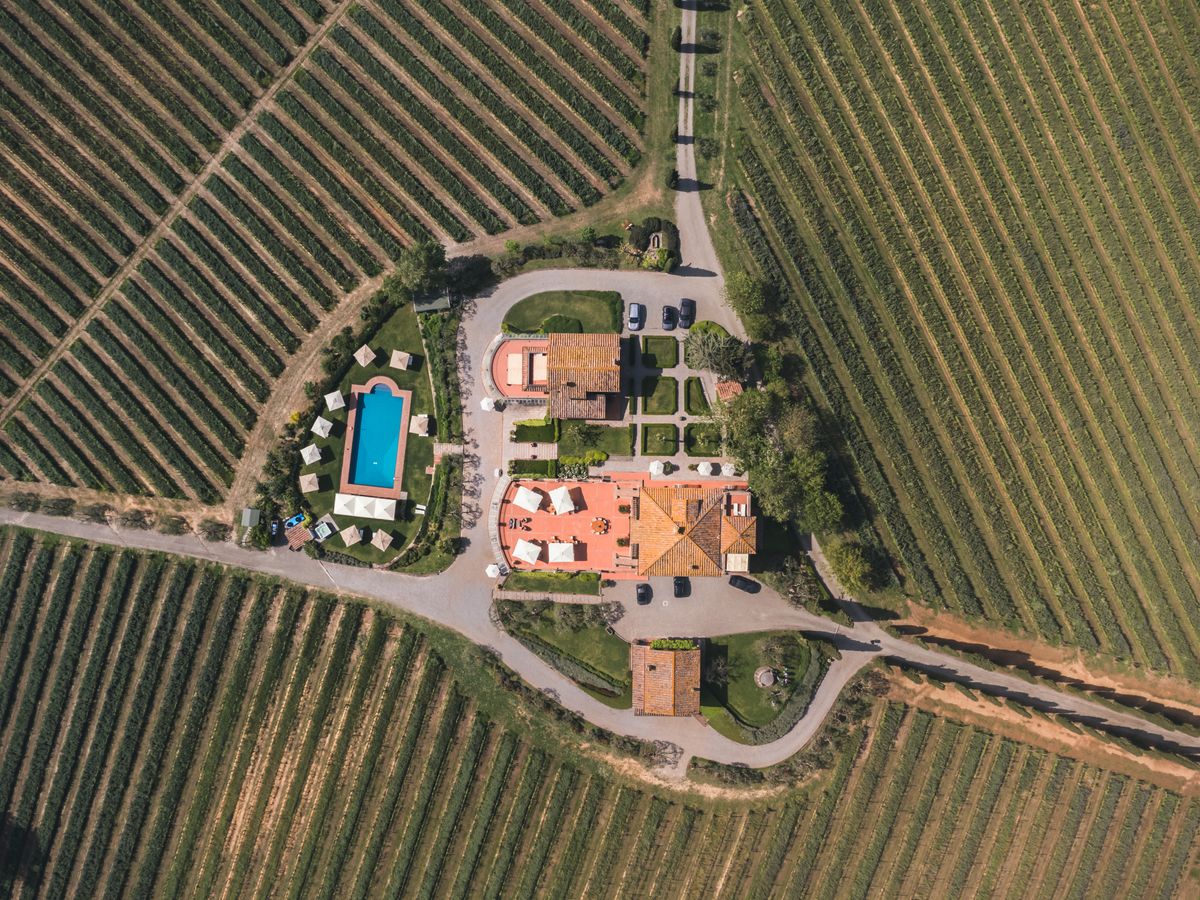
An agriturismo — a working farm with rooms — is the right answer here, and usually costs less than a mid-range hotel in Florence. You get space, a pool more often than not, breakfast made from things grown within sight of the table, and hosts who will tell you where to eat if you ask.
Three we return to, all within easy reach of the route above:

What it costs
Indicative, per person
These are ballpark figures for two people travelling together in shoulder season, excluding flights. Treat them as a starting point rather than a quote — Tuscany's prices move a great deal between August and November.
Accommodation: an agriturismo in Chianti typically runs somewhere in the range of €90–160 per night for a double in September and October, less in November.
Car hire: a small car from Pisa for three days is usually the cheapest line in the budget. Take the smallest one you can live with — the roads in Chianti are narrow and the parking spaces were not designed for estates.
Food: a proper dinner at any of the restaurants above will be a real meal at a real price. Lunch can be a €12 plate of pasta in Greve. The range is wide, which is good news — you can spend well on two dinners and casually on everything else.
Wine tasting: most estates charge for a structured tasting, typically with a tour included. Book direct rather than through a third-party platform.
What we'd change if you had four days
Add Montepulciano and Pienza, in the Val d'Orcia to the south. It's a different landscape — wider, emptier, the one on the postcards — and Pienza is small enough to see in an afternoon. It's about an hour and a half from Chianti, which makes it a day trip rather than a relocation.
If you'd rather stay put, use the fourth day to do nothing. Tuscany rewards that more than most places.
Want this built around your trip?
This route is a good general three days. A plan for your dates, your budget, your pace and the people you're travelling with is a different document — and it's the one that actually gets used.
Get your planFull itineraries from €15 · Delivered in 48 hours · No affiliate links, ever