
Everyone goes to Tallinn in summer. In October the same city costs less, holds a fraction of the crowds, and asks one thing of you in return: that you plan around the daylight.
From late spring through September, cruise ships dock in Tallinn most mornings and several thousand people walk the same handful of streets between the harbour and Town Hall Square. The Old Town is still remarkable. You just experience it in a queue, and the restaurants along the main route price accordingly.
Then the season ends. Hotel rates in Tallinn typically fall by around 30–40% once the cruise crowds thin out after September, and the medieval streets go back to being medieval streets.
What October actually looks like
The numbers, honestly
Those are the real figures, and we'd rather you have them than a paragraph about crisp autumn air. October in Tallinn is cool, frequently grey, and windier than any other month of the year — the Baltic sits right there and does not stop it.
It is also, for a certain kind of trip, the best time to come. A medieval city in low cloud and wet cobbles is not a compromise. It's arguably the version the architecture was built for.
The one thing that ruins itineraries here
Daylight, and how fast it goes
This is the part almost no guide mentions, and it's the reason people come back from an October trip feeling like they saw less than they planned.
Across October, Tallinn loses about ninety minutes of daylight. Sunset moves from roughly 18:45 at the start of the month to about 17:15 by the end. If you arrive on the 28th expecting the light you had on a summer city break, you will lose the second half of every afternoon.
The fix is simple and it changes everything:
Morning: everything outdoors. Old Town walls, viewing platforms, the harbour, Kalamaja's wooden streets. This is when you have light and when the city is quietest.
Afternoon: museums, churches, cafés, anything indoors — as the light starts going.
Evening: dinner. Which in Tallinn is genuinely worth building a day around.
Do that and October gives you a full trip. Ignore it and you'll spend the dark half of each afternoon deciding what to do.
Day 1 — The Old Town, early
Arrival day
Tallinn's Old Town is a UNESCO site and one of the best-preserved medieval centres in northern Europe — largely because the wars of the twentieth century did less damage here than in most comparable cities.
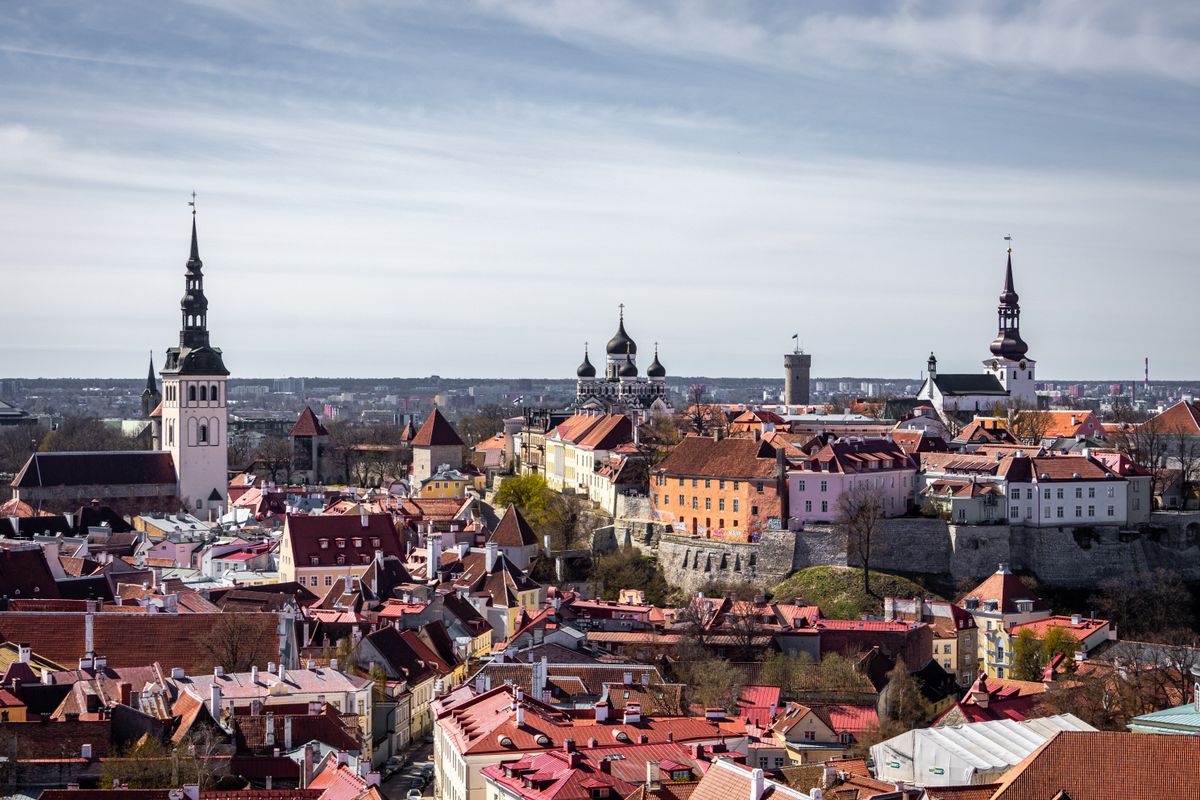
Start at the top. Toompea, the upper town, holds the parliament, the Alexander Nevsky Cathedral, and two viewing platforms — Kohtuotsa and Patkuli — looking down over the red roofs to the sea. Go in the morning: the platforms are small, they are the single most photographed spot in Estonia, and in the afternoon you'll be waiting behind a group.
Then walk down into the lower town. Town Hall Square is the centre and worth seeing; it is also where the price of a coffee doubles. See it, then leave it.
The better parts of the Old Town are the lanes off the main circuit — Katariina käik (St Catherine's Passage), the walkable stretches of the town wall, and the streets on the eastern side where fewer people bother to go.
Afternoon, when the light goes
Pick one indoor thing and do it properly. The Seaplane Harbour maritime museum is in a vast concrete hangar and holds a genuine submarine you can walk through — the best rainy-afternoon option in the city, and easily an hour and a half.
Day 2 — Kalamaja and Telliskivi
The day people skip
This is where Tallinn stops being a day trip and starts being a city.
Kalamaja is a former fishermen's and workers' district just north of the Old Town — wooden houses, quiet streets, and the neighbourhood a lot of Tallinn's under-forties actually live in. It's a fifteen-minute walk from the walls and almost nobody on a cruise stop ever sees it.
Next to it, Telliskivi Creative City occupies a set of old Soviet-era factory buildings that have been converted into studios, shops, bars, street art and — importantly — the most concentrated stretch of good eating in Tallinn.
Eat in Kalamaja or Telliskivi rather than the Old Town. Better food, better value, and you'll be sitting among people who live here.
Spend the morning walking Kalamaja's streets while there's light, and the afternoon in Telliskivi, which works fine in the dark and better in the rain.
Going in October yourself?
Your dates matter more than usual here — a trip on the 5th and a trip on the 28th have almost two hours of difference in usable afternoon light. That's the kind of thing we build the plan around.
See how it worksWhere to eat
Mostly outside the walls
If you want one significant dinner, Tallinn's fine-dining scene is well beyond what a city this size would suggest — 180° by Matthias Diether holds two Michelin stars. Book a long way ahead.
Two days or three?
Two days covers the Old Town thoroughly and gives you one good dinner. It's enough, and it's what most people do.
Three days is the version we'd recommend. It gives you Kalamaja and Telliskivi without rushing, room for one indoor half-day if the weather turns, and enough slack that a grey afternoon doesn't cost you a landmark.
Beyond three days you're looking at day trips — Lahemaa National Park to the east, or the coast — which are genuinely good but a different trip.
A waterproof layer, not an umbrella. October is Tallinn's windiest month and umbrellas fail here in a way they don't elsewhere.
Shoes with grip. The Old Town is cobbled and wet cobbles are genuinely slippery on the sloped sections up to Toompea.
Layers rather than one heavy coat — the difference between a windy square and a warm café is significant, and you'll be moving between them all day.
Getting there and around
- From Riga — around four and a half hours by coach, and comfortable. Often the simplest option for anyone already in the Baltics.
- From Helsinki — roughly two hours by ferry across the Gulf of Finland, and a genuinely pleasant crossing.
- The airport is unusually close to the centre — a tram runs from the terminal into town in about fifteen minutes.
- Once there — the Old Town, Kalamaja and Telliskivi are all walkable from one another. You will not need transport, only better shoes.
Should you go in October?
Yes, if you want a city break where you can walk all day without queueing, eat well without booking three weeks ahead, and pay noticeably less for the same hotel.
No, if you need long evenings outdoors or reliable sun. That's July, and July is fine — it's just a different, busier, more expensive city.
The one non-negotiable, whichever you choose: check the sunset time for your actual dates before you plan a single day. In October in Tallinn, that number does more damage to itineraries than anything else.
Want this built around your dates?
Same city, different trip depending on whether you land on the 5th or the 28th. We plan around your daylight, your pace, and the weather you're likely to get.
Get your planFull itineraries from €15 · Delivered in 48 hours · No affiliate links, ever